
Date a Prestige Jazz LP in 6 Checks: NYC Labels, Bergenfield, the Trident, RVG Stamps and OJC
Six things to look at, in order, to tell a 1957 New York first press from a 1985 Berkeley reissue

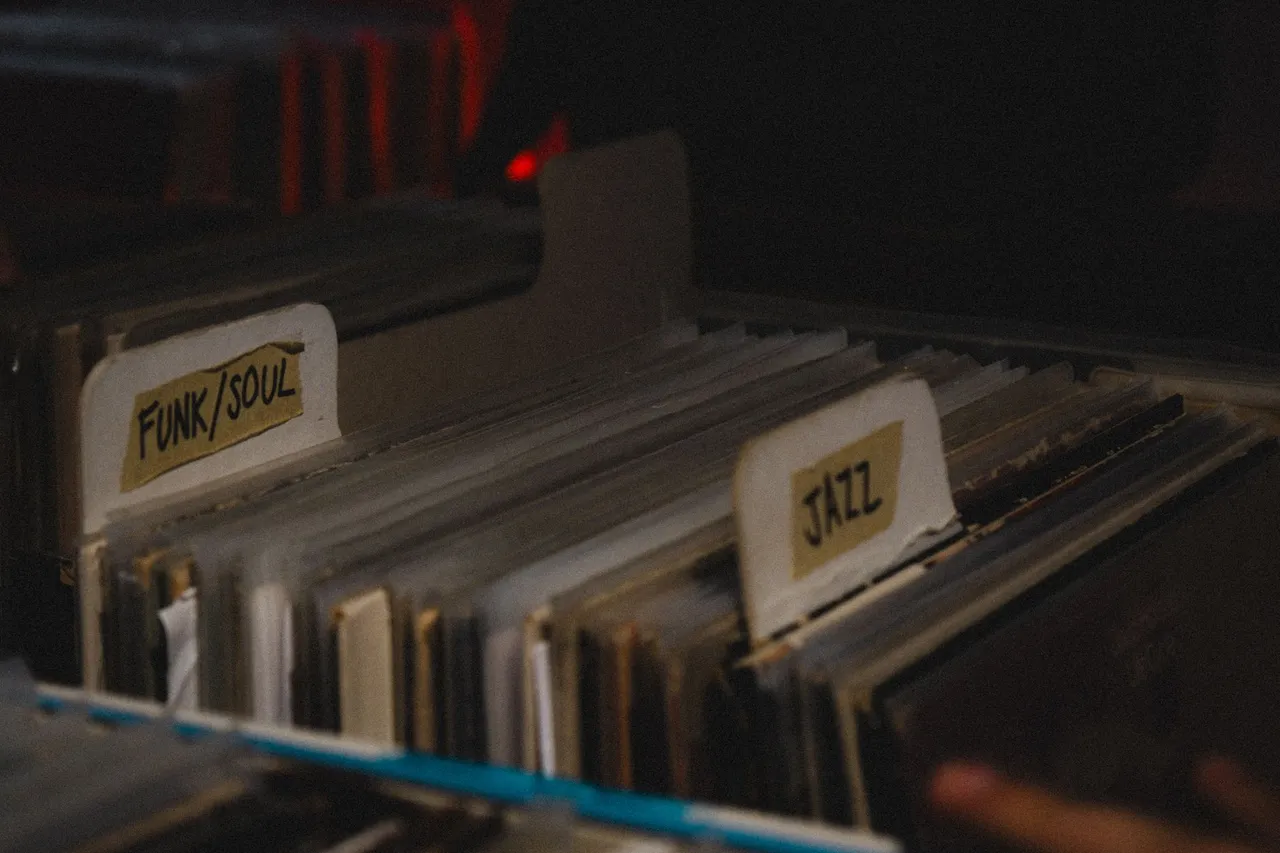
Illustration: a record, as a placeholder for the cover photo.
Prestige pressings are harder to date than Blue Note. Bob Weinstock reissued constantly, kept catalogue numbers for decades and reused cover art across label eras. A copy of Sonny Rollins' Saxophone Colossus (PRLP 7079, 1957) can turn up on four or five different labels, and the price gap between the first and the last runs to several hundred pounds. The run of 12-inch LPs from the mid-1950s to Fantasy's takeover in 1971 falls into three main label designs. Each has its own physical tells.
The Label Eras at a Glance
| Label | Address on label | Approx. years | Example first pressing |
|---|---|---|---|
| Yellow/black "NYC" | 446 West 50th St., New York | c. 1955–1958 | Miles Davis, Cookin' (PRLP 7094) |
| Yellow/black "Bergenfield" | 203 S. Washington Ave., Bergenfield, N.J. | c. 1958–1964 | John Coltrane, Lush Life (PRLP 7188) |
| Blue "trident" logo | Bergenfield, N.J. | c. 1964–1971 | Coltrane reissues, late Prestige soul-jazz |
| Fantasy-era Prestige | Berkeley, California | 1971 onward | Twofer reissues (24000 series) |
| OJC reissue | Berkeley | 1982 onward | OJC-xxx catalogue numbers |
The 6 Checks
-
Read the address on the label. "446 West 50th St. N.Y.C." means the record was pressed in roughly 1958 or earlier. "Bergenfield, N.J." means it was pressed later. This is the single biggest dividing line. A Rollins, Monk or early Coltrane title with a NYC label is almost always the one collectors want. The same title on a Bergenfield label is a later repress, unless the album was first issued after the move.
-
Feel for the deep groove. NYC labels are normally deep groove, meaning they have a ring pressed into the label area about 1cm in from the edge. Early Bergenfield pressings often keep it. Later ones drop it. A Bergenfield label with a deep groove on both sides points to the early years of that period. If it's missing on one side only, that suggests mixed press parts, which happened often at the time.
-
Check the catalogue prefix. Mono LPs carry the prefix PRLP, as in PRLP 7142, Coltrane's Soultrane. Stereo issues use PRST. Later mono copies tend to show a shortened PR prefix. Many 1950s sessions first came out in mono only. A PRST copy of a 1956 session is usually a later stereo release, not the original. The same logic applies to Prestige's subsidiaries: New Jazz (NJLP), Moodsville and Swingville.
-
Look for "RVG" and "AB" in the run-out groove. Rudy Van Gelder recorded most of the classic sessions and mastered many of the LPs himself. Those lacquers carry a hand-etched or stamped RVG in the dead wax. Plenty of Prestige pressings were made at Abbey Record Manufacturing in New Jersey, and these often show a small AB stamp. RVG plus AB on a NYC label is the classic early combination. A copy with no RVG is not always a fake, because some titles were mastered elsewhere. But on a title that is known to have it, its absence points to a later cutting.
-
Match the jacket to the label. The back cover usually prints an address too. Jackets were printed in batches and used up over time, so an NYC jacket holding a Bergenfield record is common and not suspicious. The reverse is a problem. A Bergenfield-address jacket can't hold an original NYC-era first pressing, because the record would be older than its sleeve. Also check the front: early jackets often have the title and catalogue number on a pasted-on or printed spine, while some later reissues have blank spines.
-
Rule out Fantasy and OJC copies. Fantasy bought Prestige in 1971. The 1970s Fantasy pressings have Berkeley addresses and often appear as double-album "twofers" in the 24000 series, with new cover art. These are easy to spot. Original Jazz Classics (OJC) reissues from 1982 onward are trickier. They reproduce the original front artwork and sometimes a period-style label. Look for an OJC- catalogue number on the spine, the label or the back. That number is the giveaway, along with a Berkeley address. OJCs are often well-pressed, cost a fraction of an original and are worth owning as players. Just don't pay NYC prices for one.
For any Prestige title, look up its recording date in a session discography such as jazzdisco.org before you look at labels. If the session was recorded after mid-1958, a NYC label can't be the first pressing, so a seller calling a Bergenfield copy "first label" may be right after all. Prestige often held sessions back for years: Miles Davis's 1956 marathon recordings were released between 1957 and 1961. Because of this, the recording date tells you less than the PRLP number does. Check where the catalogue number falls against the label move, around the 7140s–7150s, and you'll know which label the first issue should carry.

Dexter "Deck" Miller
80s New Wave & Cassette Enthusiast
Dexter is the resident expert on all things 1980s, from neon-lit synth-pop to the quirky resurgence of cassette tape physical media. He reviews classic synth-driven albums, gives advice on vintage tape deck maintenance, and analyzes the golden era of MTV-era physical formats.


Comments (0)
No comments yet. Be the first to share your experience.