
Repair a Split Record Jacket Seam in 7 Steps: Archival Glue, Mat Board Inserts, Clamping and Pressing
Closing an open seam with archival PVA so the jacket stays flat, square and invisible from the shelf

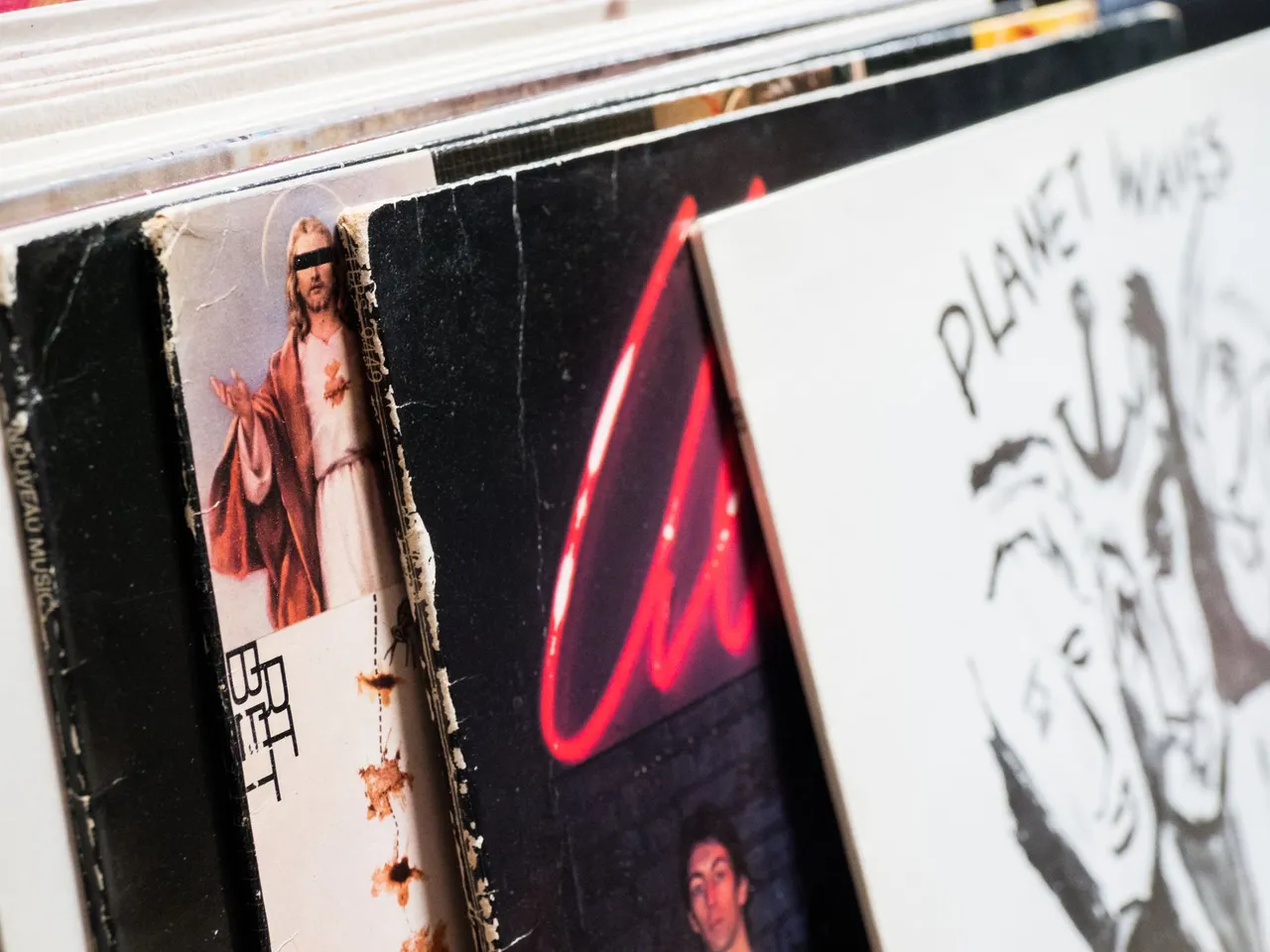
Illustration: a record, as a placeholder for the cover photo.
Most seam splits start the same way. A record sits inside its jacket for decades, gets pulled out and pushed back thousands of times, and the disc's edge works against the bottom or side seam until the old animal glue gives up. A clean split along the glue line can be closed so it is nearly invisible. A tear through the board itself is harder and needs reinforcement from inside.
What You Need
- pH-neutral PVA adhesive, such as Lineco Neutral pH Adhesive. Avoid craft PVA, which often yellows.
- A fine flat brush (size 4 synthetic) or a thin palette knife
- A piece of mat board or 2 mm greyboard cut to about 30 × 30 cm
- Wax paper or silicone release paper
- Four or five bulldog clips, plus two flat boards or a stack of heavy books
- A bone folder
- A slightly damp lint-free cloth
- For torn gatefold spines only: Filmoplast P90 archival repair tape
Do not use Scotch tape, packing tape, rubber cement or hot glue. All of them discolour, lose their grip or bleed through within a few years. Each one lowers a sleeve's grade more than the split did.
The Repair
-
Take everything out. Remove the record, the inner sleeve and any inserts. Brush loose fibres and old flaking glue out of the seam with a dry brush. Leftover crumbs stop the two surfaces sitting flat.
-
Assess the split. If the seam has opened cleanly along the folded flap, a glue-only repair will work. If the board has torn, or the flap is missing, plan to back the damage with Filmoplast P90 from the inside after the glue step.
-
Insert the mat board. Wrap the mat board in wax paper and slide it fully into the jacket. It holds the jacket square while you work, and it stops glue that seeps through from bonding the front panel to the back.
-
Apply a thin layer of glue. Lift the flap gently. Brush a thin, even film of PVA onto the flap only, not the panel, and stop about 3 mm short of the outer edge. Too much glue is the most common mistake. It squeezes out, shines under light and cockles the board.
-
Close and burnish. Press the flap down. Lay a strip of wax paper over the seam and run the bone folder along it firmly from the centre outwards. Wipe away any squeeze-out straight away with the damp cloth. PVA cleans up with water before it sets but not after.
-
Clamp and press. Put wax paper over the seam, then clip it every 6–8 cm with bulldog clips. Pad the jaws with folded card so they do not leave dents. Lay the whole jacket between two flat boards under books for 12–24 hours. Pressing the full jacket stops the board warping as the moisture from the glue dries.
-
Check, then reinforce if needed. Remove the mat board and look along the seam under a raking light. For gatefold spines or torn corners, cut Filmoplast P90 to size, round its corners so they don't lift, and apply it to the inside surface only. Burnish it with the bone folder. Leave the jacket empty for another day before you put a record back in.
Lifting Front Slicks
Many 1960s US and UK jackets have a printed paper slick pasted over the board, and its edges often lift near the seams. Fix these the same way. Use an even thinner film of PVA on the board side, burnish through wax paper, and press flat overnight.
Most seams split again within a year if the disc goes straight back into the jacket. Store the record in a polylined inner sleeve placed beside the jacket, with both inside a resealable outer sleeve. The seam then carries no load at all. If you ever sell a repaired jacket, note "seam professionally reglued" in the listing. Graders treat a disclosed, clean repair far more kindly than one they find themselves.

Chloe Sterling
Modern Collector & Vinyl Care Specialist
Chloe is a music archivist dedicated to helping new collectors protect and preserve their vinyl records. With a background in chemistry and library science, she writes accessible guides on record cleaning, storage solutions, and inner sleeve materials. Her goal is to ensure every collection survives for generations to come.


Comments (0)
No comments yet. Be the first to share your experience.